

Neighbor’s Tree Blocking Your Solar Panels? The Law
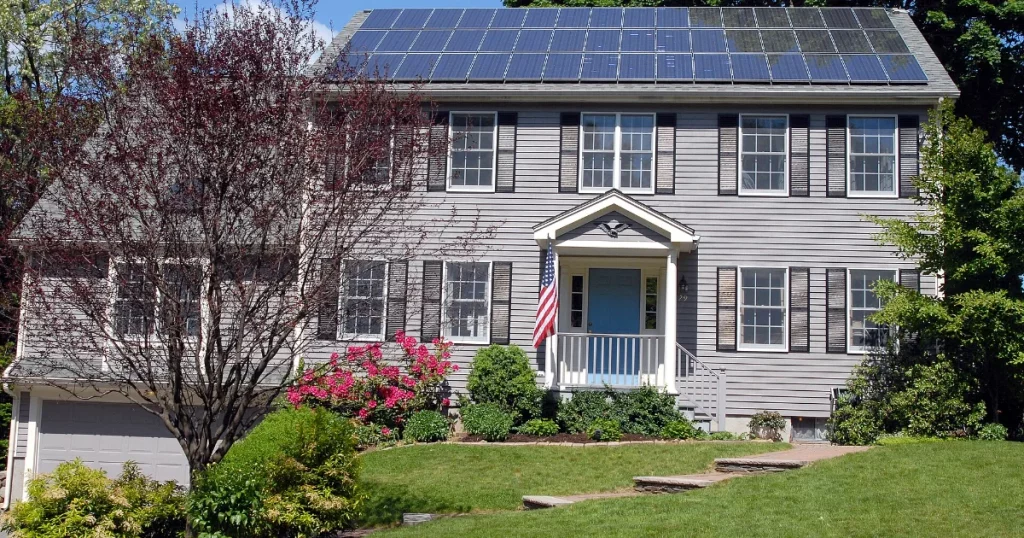
If a neighbor’s tree is shading your solar panels, whether you can force them to trim or remove it depends almost entirely on the state you live in. The default rule across most of the United States is blunt: you have no legal right to sunlight crossing a neighbor’s land, so a tree that shades your panels is usually not something a court will act on. A small number of states are the exception. California’s Solar Shade Control Act is the best-known law that can require a neighbor to keep a tree from shading a solar collector, but even it applies only in narrow circumstances.
This guide explains the default “no right to light” rule, the states and tools that protect solar access, exactly when a neighbor’s tree is and is not actionable, and the practical steps to protect the sun reaching your panels.
Can you force a neighbor to trim a tree shading your solar panels?
Usually not, unless your state has a solar-access law or you hold a solar easement. In the majority of states there is no common-law right to receive sunlight over adjoining property, so a neighbor is generally free to let a tree grow even if it shades your system. A handful of states change that result by statute, and a recorded solar easement can guarantee access anywhere. So the real question is not “is this fair,” but “does my state give me a legal right to that sunlight, and did I secure it?”
This is different from a tree that merely blocks a view or casts general shade, which is almost never actionable. For that broader issue, see our guide on a neighbor’s trees blocking your view or light. This article focuses specifically on solar collectors, where special statutes can apply.
The default rule: no legal right to sunlight
American law rejected the old English “ancient lights” doctrine, which had given long-time users of light a right to keep receiving it. The landmark decision widely followed in the United States held that a landowner has no legal right to the free flow of light and air across adjoining land. The practical result: if your neighbor’s tree grows tall and shades your roof, the general common law gives you no claim, no matter how much it hurts your solar production.
Because of that default, protection for solar access has to come from somewhere else, either a specific state statute or a private easement you negotiate. Without one of those, a shading tree is treated like any other lawful use of a neighbor’s land.
States that protect solar access
Solar-access protection is a patchwork. A few states directly limit shading of solar collectors; many more have “solar easement” and “solar rights” statutes that enable voluntary agreements or stop HOAs from banning panels, without giving you any right against a neighbor’s tree.
| Type of law | What it does | Does it help against a neighbor’s tree? |
|---|---|---|
| Solar shade / access law (e.g., California) | Limits how much a neighbor’s tree or shrub may shade a solar collector | Yes, in narrow circumstances |
| Solar easement statute (most states) | Lets neighbors create a voluntary, recorded agreement guaranteeing sunlight | Only if you actually negotiate and record one |
| Solar rights law | Stops HOAs and covenants from prohibiting solar panels | No, it addresses HOA rules, not neighbors’ trees |
California’s Solar Shade Control Act
California’s Solar Shade Control Act is the leading example of a law that can require a neighbor to control a shading tree. In general terms, it prohibits a property owner from allowing a tree or shrub to shade more than 10% of a neighbor’s solar collector between 10 a.m. and 2 p.m., but only when the tree or shrub was planted after the solar collector was installed. Key features include:
- Planted-after rule: Trees and shrubs that were already there when the panels went in are exempt. The law protects your solar access against new growth, not pre-existing trees.
- The 10% / 10-to-2 standard: The restriction is measured by shading of the collector during the middle of the day, when solar gain is highest.
- Civil, not criminal: A 2008 amendment (effective 2009) changed violations from a potential criminal nuisance to a civil matter and added the planted-after exemption.
- Notice and exemptions: Enforcement typically follows written notice to the tree owner, and the Act contains exemptions, for example for certain replacement trees.
Because California also has strong tree-protection and removal rules and local tree-preservation ordinances, a solar-shade claim can run into a protected or heritage tree, which complicates removal. The two bodies of law have to be read together.
Solar easements and rights in other states
Most states have enacted solar-easement statutes, but these do not automatically give you sunlight. They simply authorize a voluntary, recorded easement between neighbors. Some states, such as New Mexico, have broader “solar rights” frameworks. Outside the small group of states with true solar-shade laws, your protection generally depends on negotiating an easement before a dispute arises. Check your state energy office or a solar-law resource for your state’s specific statute.
When a neighbor’s tree is (and isn’t) actionable
Even where a solar law exists, the outcome hinges on timing and specifics. The table below shows how the same shading tree can produce very different results.
| Situation | Likely outcome |
|---|---|
| Tree planted after your panels, in a solar-shade-law state, shading >10% midday | Potentially actionable; owner may have to trim |
| Tree that existed before your panels were installed | Generally exempt, even under a solar-shade law |
| Any shading tree in a state with no solar-access law and no easement | Not actionable; no right to the sunlight |
| Sunlight guaranteed by a recorded solar easement | Actionable as a breach of the easement |
The recurring theme is that pre-existing trees are almost always protected, and a right to sunlight has to be secured in advance. This is why planning panel placement and easements before installation matters so much.
Solar easements: the durable fix
A solar easement is a voluntary, written, recorded agreement in which a neighbor grants you a defined right to sunlight across their property. Because it runs with the land, it binds future owners too. A well-drafted solar easement typically describes the angles and hours of sun protected, the vegetation or structures that cannot obstruct it, and any compensation. In states without a solar-shade law, an easement is often the only reliable way to protect panels from a neighbor’s future trees, and it is far cheaper to negotiate up front than to litigate later. If your neighbor is cooperative, proposing an easement before you install is the strongest move you can make.
How to resolve a tree-versus-solar dispute
Whether or not your state has a solar law, work up the ladder from conversation to formal steps.
Talk and document
Start with a friendly conversation; many neighbors will agree to a trim, especially if you offer to share the cost. Meanwhile, document the shading with dated photos and, ideally, data from your solar monitoring app showing the production loss. Note when the panels were installed and, if you can, when the tree was planted, because that timing is decisive under laws like California’s.
Send written notice
If talking does not work and you are in a solar-access state, a written notice to the tree owner requesting compliance is usually a required step before any enforcement. Keep a copy and send it in a way that proves delivery. A calm, specific letter also creates a record that you tried to resolve the matter reasonably.
Mediation and legal action
Neighbor mediation is cheaper and faster than court and often resolves these disputes. If it fails and you have a genuine legal right, through a solar-shade statute or an easement, consult a local attorney about enforcement. Where you have no such right, the honest answer is that trimming is up to your neighbor’s goodwill, and relocating or adding panels may be more productive than a losing legal fight.
Frequently asked questions
Is there a legal right to sunlight for solar panels?
Not by default. Most states follow the rule that there is no right to light and air across a neighbor’s land. Only a few states have solar-access laws, and a recorded solar easement is the general way to secure sunlight anywhere.
Can I make my neighbor cut a tree shading my panels in California?
Possibly, under the Solar Shade Control Act, but generally only if the tree or shrub was planted after your solar collector was installed and it shades more than 10% of the collector between 10 a.m. and 2 p.m. Pre-existing trees are typically exempt.
What if the tree was there before my solar panels?
Pre-existing trees are usually exempt even in states with solar-shade laws. Your practical options are to negotiate a trim, obtain an easement, or adjust your panel layout.
What is a solar easement?
It is a voluntary, recorded agreement in which a neighbor guarantees you sunlight across their property. It binds future owners and is often the only durable protection in states without a solar-access law.
Does a solar rights law protect me from a neighbor’s tree?
No. Solar rights laws generally stop HOAs and covenants from banning panels; they do not give you a right against a neighbor’s tree. That protection comes from a solar-shade statute or an easement.
Disclaimer: This article is general information, not legal advice. Solar-access statutes, solar-easement laws, and tree-protection rules vary by state and locality, and the details of laws like California’s Solar Shade Control Act matter to any specific case. Consult a licensed attorney in your state before acting.
