

Dangerous Tree on Abandoned Property: What You Can Do
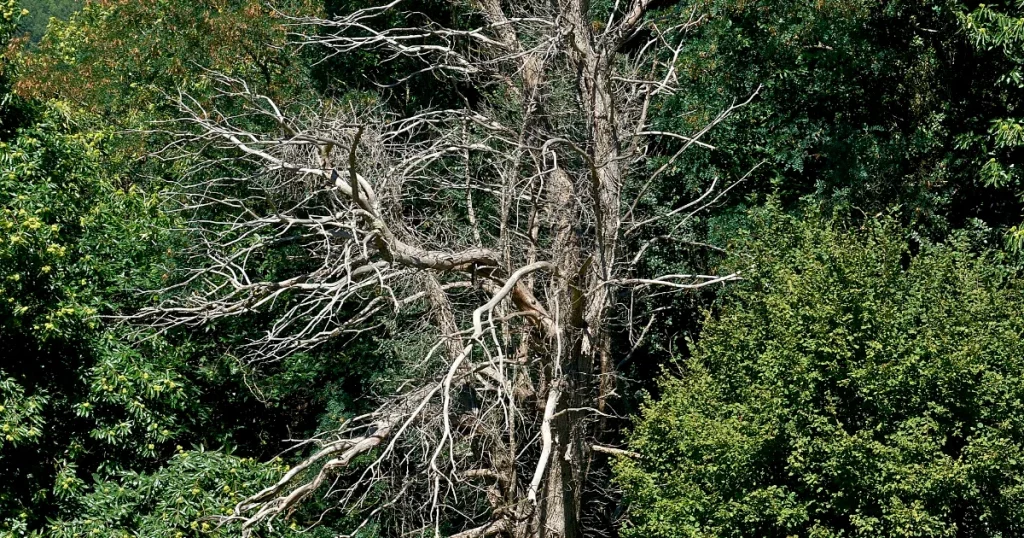
When a dangerous tree stands on abandoned or vacant land, the legal owner of that land is still responsible for it — but because absentee owners rarely respond, your fastest practical remedy is usually your local code enforcement office, not a lawsuit. Most municipalities have nuisance and dangerous-condition ordinances that let the city order abatement, remove the tree itself, and bill the owner or place a lien on the property.
Vacancy does not erase liability. A property with no one living on it still has an owner of record, and the ordinary duty to keep a tree from becoming a foreseeable hazard to neighbors travels with that ownership. The difficulty is never the legal principle — it is finding a responsible party who will act before the tree comes down.
This guide covers who is legally responsible, how to establish the notice that makes liability stick, the municipal routes that actually work, and what happens if the tree falls before anyone acts.
This article is general information, not legal advice. Tree liability, nuisance, and abatement rules vary considerably by state and municipality. Consult a licensed attorney in your jurisdiction about your specific situation.
Who is legally responsible for a tree on vacant land
Responsibility follows ownership of the land the trunk grows on, exactly as it does for an occupied property. Whether anyone lives there is legally irrelevant to the duty; it only affects how hard the duty is to enforce.
Under general negligence principles, a landowner has a duty to take reasonable care that trees on their property do not create a foreseeable danger to adjoining land or to people lawfully nearby. As NC State Extension’s summary of tree fall liability explains, someone harmed by a falling tree generally has to show the adjoining owner was negligent in allowing a dangerous tree to remain standing — not merely that the tree fell.
Identifying the actual owner
“Abandoned” is a colloquial description, not usually a legal status. Almost every neglected parcel has an owner of record somewhere. Common possibilities:
| Situation | Likely responsible party | Where to look |
|---|---|---|
| Owner moved away, still holds title | The individual owner | County assessor or recorder records |
| Foreclosed, bank-owned | The lender or servicer | Recorded foreclosure deed; servicer contact |
| Owner deceased, estate unsettled | The estate or its executor | Probate court records |
| Tax-delinquent, not yet forfeited | Owner of record until forfeiture completes | County treasurer or tax office |
| Reverted to the county or city | The government entity | County land bank or property office |
| Held by an inactive LLC | The entity and possibly its registered agent | Secretary of State business registry |
County property records are public and usually searchable online by address or parcel number. They give you a name and a mailing address of record — which is exactly what you need for the next step.
Why written notice is the critical step
In most states, liability for a fallen tree turns on whether the owner knew or reasonably should have known the tree was hazardous. That concept — constructive notice — is the pivot on which nearly every one of these cases moves. A tree owner who genuinely had no reason to know of a defect often escapes liability. One who was told in writing, with photographs, and did nothing is in a very different position.
This is why documenting the hazard and notifying the owner matters even when you doubt they will respond. Notice does two things at once: it gives the owner a chance to act, and it builds the record that establishes their knowledge if the tree later causes damage. Our detailed guide to constructive notice in tree law explains how courts assess what an owner should have known.
How to give effective notice
- Photograph the tree thoroughly — the full tree, the trunk base and root plate, any cavity, fungal growth, dead limbs, cracks, or lean, and what the tree threatens on your side.
- Get a professional opinion. A written assessment from a certified arborist turns “I think it looks dangerous” into documented expert evidence. See tree risk assessment for what that involves.
- Write to the owner of record at the mailing address on the tax rolls. Describe the defect, attach photographs and the arborist report, and ask for the hazard to be abated within a reasonable, stated time.
- Send it by a trackable method — certified mail with return receipt is the standard. Keep the receipt and a copy of everything.
- Send it again if the deadline passes without response, and keep every attempt on file.
Even mail that comes back undeliverable is useful evidence: it documents your diligence and the owner’s failure to maintain a reachable address. Our neighbor tree dispute letter template can be adapted for an absentee owner.
The route that usually works: local government
For an abandoned property, code enforcement is almost always faster and cheaper than any private legal remedy. Nearly every municipality prohibits property owners from maintaining dangerous conditions, and a dead or structurally failing tree threatening neighboring property fits squarely within those ordinances.
| Office to contact | What they can typically do | Best for |
|---|---|---|
| Code enforcement / nuisance abatement | Inspect, cite the owner, order removal, abate and lien | The primary route for most hazardous-tree complaints |
| City or county arborist / urban forestry | Professional assessment; jurisdiction over street trees | Confirming the tree is genuinely hazardous |
| Building or blight department | Vacant-property registration and enforcement | Properties with broader neglect issues |
| Land bank | Direct action if the parcel has reverted to public ownership | Tax-forfeited land |
| Utility company | Removal where the tree threatens their lines | Trees contacting or overhanging power lines |
| Emergency services | Immediate response to imminent collapse | Active, urgent danger to people |
File your complaint in writing and reference the specific ordinance if you can find it. Attach your photographs and any arborist report. Ask for a case number, and follow up in writing — persistence is usually what moves these files. If the tree threatens a power line, call the utility directly; they generally have both the authority and the motivation to act quickly, as our page on tree branches touching power lines explains.
How abatement and liens work
When an owner ignores a valid abatement order, most municipalities can do the work themselves and recover the cost by assessing it against the property, typically as a lien collected with property taxes. This is why code enforcement succeeds where private letters fail: the city does not need to locate a cooperative human being, only a parcel.
Private legal remedies
If the municipality will not act, private options exist — but weigh them against cost and delay.
A nuisance claim
A tree that substantially interferes with your use and enjoyment of your own property may be actionable as a private nuisance. Where a court agrees, it can order the tree abated. The difficulty with an absentee owner is service of process and collection: winning against someone who cannot be found and has no reachable assets may produce a judgment you cannot enforce.
Self-help and its hard limits
Nearly every state permits you to trim branches and roots intruding onto your property, back to the boundary line, at your own expense. That right does not extend to entering the vacant parcel, cutting the trunk, or removing the tree — doing so is trespass and destruction of property, and tree damage statutes in many states impose double or triple damages. The property being empty changes none of this. Our guide on whether you can be sued for trimming a neighbor’s tree covers where the line falls, and whether you can force a neighbor to remove a dangerous tree addresses the compulsion question.
The temptation to simply take the tree down yourself is understandable and is close to always a mistake. An owner who resurfaces after you have removed a mature tree may have a far stronger claim against you than you ever had against them.
If the tree falls before anyone acts
When a tree from a vacant property comes down on your land, the general rule in most states is that your own property insurance handles damage to your structures regardless of where the tree grew. Your insurer may then pursue the owner if negligence can be shown — which is precisely where your documented notice becomes valuable.
| Circumstance | Typical outcome |
|---|---|
| Healthy tree falls in a storm | Usually treated as an act of God; each owner’s insurance covers their own damage |
| Visibly dead or defective tree falls, owner had notice | Negligence claim against the owner is realistic |
| Defective tree falls, no notice ever given | Harder claim; owner may argue they had no knowledge |
| Tree falls, owner cannot be located or is insolvent | Claim may be uncollectible even if legally sound |
| Tree from public or forfeited land falls | Government claim procedures apply, often with short deadlines |
Document everything before cleanup and report promptly to your insurer. Our guides to act of God tree damage and filing a tree damage insurance claim walk through the process. Note that claims against a government entity often carry notice deadlines far shorter than ordinary statutes of limitation.
A practical order of operations
- Assess urgency. If collapse looks imminent and people are at risk, call emergency services or the utility now.
- Document. Photograph the tree and its defects, dated, from several angles.
- Get an arborist assessment if the situation is serious enough to justify the cost.
- Find the owner of record through county property records.
- Send certified written notice with photos and the arborist report; keep proof.
- File a code enforcement complaint in writing, with a case number, and follow up.
- Escalate to the utility, land bank, or elected officials if enforcement stalls.
- Protect your own position — review your insurance coverage and keep your file organized.
- Consider legal advice if the risk is substantial and the administrative routes have failed.
For understanding what actually makes a tree hazardous, the International Society of Arboriculture’s work on liability for damage caused by hazardous trees is a useful technical reference, and a credentialed arborist can apply those standards to the specific tree.
Frequently asked questions
Can I remove a dangerous tree on abandoned property myself?
No. Entering the parcel and cutting the tree is trespass and destruction of property, and many states impose double or triple damages for unauthorized tree cutting. You may generally trim intruding branches back to your property line, but nothing beyond that.
Who pays if a tree from a vacant lot falls on my house?
In most cases your own homeowners policy covers damage to your structures, subject to your deductible. Your insurer may seek recovery from the landowner if the tree was visibly defective and the owner had notice, which is why documented written warnings matter.
What if I cannot find the property owner at all?
Go to code enforcement. Municipal nuisance abatement does not require a cooperative owner — the city can act and attach the cost to the parcel. County property, probate, and tax records are also worth searching, as is the Secretary of State registry if the owner is a business entity.
Does a bank that forecloses become responsible for the tree?
Generally yes, once the lender holds title. Servicers of bank-owned property usually have property-preservation obligations, and a written complaint to the servicer — identified through the recorded foreclosure documents — can produce faster results than a letter to a former owner.
How long does the city usually take to act?
It varies widely, from days for an imminent hazard to months for a routine nuisance case. Filing in writing, supplying an arborist report, obtaining a case number, and following up consistently are the things most likely to accelerate it.
Is a dead tree automatically considered dangerous?
Not automatically. A dead tree in open ground far from anything it could damage may pose little risk and can even have ecological value. Hazard depends on the likelihood of failure combined with what the tree would strike — the “target” — which is what a formal tree risk assessment evaluates.
Can I bill the owner for removal if I take care of it?
Not reliably, and not by acting unilaterally. Doing the work without authorization exposes you to liability rather than creating a right to reimbursement. The municipal abatement-and-lien process exists precisely to handle this properly.
The bottom line
The owner of the land remains responsible for the tree no matter how long the property has sat empty. Your practical leverage comes from two things: creating a documented record that the owner was warned, and using municipal nuisance abatement, which can compel removal and recover the cost against the property without anyone ever answering the door.
What you should not do is take matters into your own hands. Cutting a tree on land that is not yours carries far more legal risk than the tree itself, even when the property looks forgotten.
Disclaimer: This article provides general information about tree law, nuisance, and liability and is not legal advice. Ordinances, notice requirements, liability standards, and claim deadlines vary substantially by state and municipality. Consult a licensed attorney in your jurisdiction and your local code enforcement office regarding your specific circumstances.
