

Who Is Responsible for Trees in an Easement?
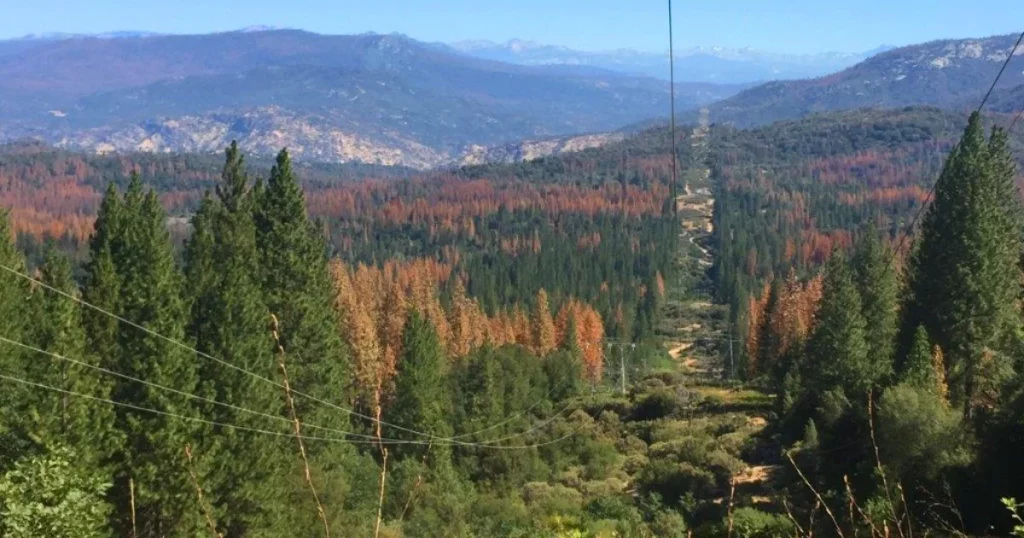
If a tree stands inside an easement on your land, you almost always still own it — and you keep the baseline responsibility for its condition. What the easement changes is that someone else has a legal right to cut, prune, or remove that tree when it interferes with the use the easement was granted for. Ownership and control are split, and that split is why easement tree disputes are so consistently confusing.
The practical answer to “who is responsible?” almost always comes down to one document: the recorded easement itself. Before assuming anything — before you plant, before you object to a crew with chainsaws, before you pay a removal bill — read the instrument. This guide explains how easements work with trees, what the default rules are when the document is silent, who pays in the common scenarios, and what to do when a utility or neighbor goes too far.
Easement basics, in tree terms
An easement is a recorded right for someone else to use part of your land for a defined purpose. It does not transfer ownership. Two terms make the rest of this readable:
- Servient estate — the burdened land. That is you, the property owner. You own the soil and, with it, the trees growing in it.
- Dominant estate — the party holding the right. A utility, a municipality, a neighbor with a shared driveway, a pipeline company.
Because you own the trees, you retain the burdens of ownership: liability if one falls and hurts someone, responsibility for hazard removal, and the tax and aesthetic consequences. Because the easement holder has a right of use, they may cut what obstructs that use — often without asking, and often without paying you.
Common easement types affecting trees
| Easement type | Typical holder | Typical tree rights |
|---|---|---|
| Utility (overhead electric) | Power company | Broad — prune, remove, and often clear the full corridor; frequently includes “danger trees” outside the strip |
| Utility (underground gas, water, sewer, fiber) | Utility or municipality | Excavate and clear; often prohibits planting trees over the line at all |
| Right-of-way / roadway | City, county, or state DOT | Clear for sight lines, clearance, and maintenance |
| Access / shared driveway | Neighboring parcel | Limited — remove only what obstructs passage |
| Drainage | Municipality or district | Clear to maintain flow and access the channel |
| Conservation | Land trust or agency | Reverse of the others — usually restricts the owner from cutting |
| Prescriptive / implied | Varies | Narrow; limited to the historical use actually established |
Conservation easements are worth flagging because they invert the usual expectation. There, the document typically limits what you may cut, and removing a tree without approval can breach the agreement.
Who owns the tree — and why it matters
The landowner owns trees growing within an easement. The easement holder has a right of use, not title. This has real consequences that often surprise people on both sides.
What stays with you
- Liability. If a tree in the easement is dead and falls on a neighbor’s garage, you are the one with the duty of reasonable care. The easement does not transfer that duty. See our discussion of constructive notice for how that duty is triggered.
- The wood and the value. Timber cut from your land generally remains yours, and the tree’s appraised value is yours to claim if it is wrongfully destroyed.
- The removal bill for anything the easement holder is not obligated to handle — most notably a hazardous tree that does not actually threaten their facilities.
- The right to use the land for anything that does not interfere with the easement’s purpose.
What the easement holder gets
The holder may do what is reasonably necessary to exercise and maintain the granted right — no more. The scope is the key limit. A utility with an overhead line easement may clear for conductor clearance and to prevent outages; it may not clear the strip for unrelated reasons, and it generally may not remove trees well outside the described corridor unless the grant covers “danger trees” (many modern utility grants do).
When the document is silent on maintenance
Most disputes arise because the instrument says nothing useful. The general default rule is that the dominant estate — the easement holder — bears the duty of maintaining the easement area for the purpose it serves, since they are the party benefiting from it. Applied to vegetation, that usually means the utility or municipality does the clearing on its own schedule and at its own cost.
But two important caveats follow:
- Maintenance duty is not the same as hazard-tree duty. The holder maintains the easement for its purpose. If a tree is dangerous to your house rather than to their line, that is your problem, not theirs.
- The holder is generally not obligated to clear. A right to cut is not a duty to cut. A utility that chooses not to trim is usually not liable to you for the tree’s condition.
Default responsibility, by scenario
| Situation | Who normally acts | Who normally pays |
|---|---|---|
| Branches growing into overhead power lines | Utility | Utility |
| Dead tree in the easement threatening your house, not the line | You | You |
| Tree roots damaging a buried municipal sewer main | Municipality (repair); often you (tree) | Fact-dependent; check the grant and local ordinance |
| Tree fell across a shared-access easement | Usually the easement holder, to restore access | Often shared or allocated by the grant |
| Debris left after a utility clearing crew | Utility, if the grant or tariff requires cleanup | Varies widely by state and utility |
| Tree you planted inside a marked underground easement | You | You — and you may bear excavation damage costs |
| Neighbor’s tree blocking a private access easement across your land | Tree owner | Tree owner |
Utility easements: the most common flashpoint
Overhead electric easements produce more tree disputes than everything else combined, and the law tilts strongly toward the utility. Federal and state reliability rules require utilities to keep vegetation clear of transmission conductors, and after a decade of catastrophic wildfires the clearance standards and enforcement have become considerably more aggressive.
What utilities can generally do
Within the granted corridor, a utility can typically prune to specified clearances, remove trees whose mature height is incompatible with the line, and in many grants remove “danger trees” outside the corridor that could strike the conductors if they failed. Many easements permit entry without individual notice, though most utilities provide courtesy notice as a matter of policy rather than obligation. Compensation is usually not owed for work within the granted rights, because the original grantor was paid once when the easement was created.
What they generally cannot do
- Exceed the described corridor width without a danger-tree clause or a separate agreement.
- Remove trees for reasons unrelated to the easement’s purpose.
- Perform work negligently — topping a tree so badly it dies, or damaging trees outside the scope, can create liability.
- Ignore an ordinance or state tariff that imposes notice, replanting, or cleanup obligations.
If a crew has already exceeded scope, our guides on compensation when a utility cuts your tree and whether a utility can cut without permission cover the remedies in detail.
Planting in and around an easement
The cheapest easement dispute is the one you never create. Before planting anywhere near a recorded easement:
- Pull the recorded documents from the county recorder or your title policy. Note the exact width and the language on vegetation.
- Call 811 before any digging. It is free, usually required by law, and marks buried utilities.
- Match mature height to the corridor. Under and beside overhead lines, utilities generally want species maturing under roughly 25 feet; larger species belong well outside the strip.
- Never plant a tree over a buried line. Roots and future excavation guarantee conflict, and you will lose the tree eventually.
- Ask the utility’s forestry department. Most publish approved species lists and will advise for free.
- Get written permission for anything marginal and keep it with your deed.
A tree planted in violation of an easement can be removed later at your expense, with no compensation, however mature and valuable it has become.
Handling a dispute
If work is planned and you object
Ask for the specific easement document and the specific provision authorizing the work, in writing, before the crew arrives. Ask for the clearance standard being applied and the planned scope. Photograph every tree beforehand from several angles — this is what you will need if the crew exceeds scope. If you believe the plan goes beyond the grant, raise it with the utility’s forestry manager and, if necessary, your state public utility commission, which regulates vegetation-management practices and accepts complaints.
If the work has already exceeded scope
- Photograph everything immediately, including stumps, cut faces, and the corridor boundary relative to the survey line.
- Locate the easement’s described width and establish, ideally by survey, whether the cut trees stood inside or outside it.
- Get a tree appraisal from a qualified arborist using a recognized valuation method — replacement value for smaller trees, trunk-formula or income-based methods for large specimens.
- Send a written demand to the utility or contractor.
- Consider statutory timber-trespass remedies. Most states impose double or treble damages for unauthorized cutting, and a utility acting outside its granted rights is not automatically protected. See what timber trespass means.
- Escalate to the public utility commission, and consult a property attorney if the value is significant.
Frequently asked questions
Who owns a tree standing in a utility easement?
You do, as the landowner. The utility holds a right to use the corridor, not title to the land or the trees on it.
Can a utility remove my tree without asking?
Usually yes, if the tree is within the granted corridor or falls under a danger-tree clause. Many easements do not require individual notice, though most utilities give it voluntarily. What they cannot do is exceed the scope of the grant.
Do I get paid when a utility removes trees from an easement?
Generally no. The original grant was compensated when it was created, and later maintenance within its scope is covered by that grant. Compensation becomes available when the utility exceeds its rights or works negligently.
If a tree in the easement is dead and dangerous, whose problem is it?
Yours, unless it endangers the easement holder’s facilities. You own the tree and owe the duty of reasonable care to anyone the tree could hurt.
Can I plant a tree in an easement?
Sometimes, but check the recorded language first. Underground utility easements usually prohibit trees outright; overhead corridors often permit low-growing species. Anything planted in violation can be removed later at your cost.
Who removes a tree that fell across a shared driveway easement?
Typically the party whose use is obstructed acts to restore access, but the recorded agreement controls. Many shared-access easements allocate maintenance costs between the parties.
Does an easement transfer when I sell the property?
Recorded easements run with the land and bind every future owner. They will appear in your title report; read them before closing.
What if I cannot find the easement document?
Start with your title insurance policy and the county recorder’s office. Your title company can usually pull the recorded instrument. If a use exists with no recorded grant, it may be prescriptive or implied — a narrower right that generally extends only as far as the historical use.
Disclaimer: This article is general information about property and tree law, not legal advice. Easement rights are defined by specific recorded documents and by state law, and utility vegetation-management rules vary by jurisdiction and by regulated tariff. Read your own recorded easement and consult a licensed attorney in your state before acting.
