

Spite Fence Laws and Trees: When a Hedge Becomes Illegal
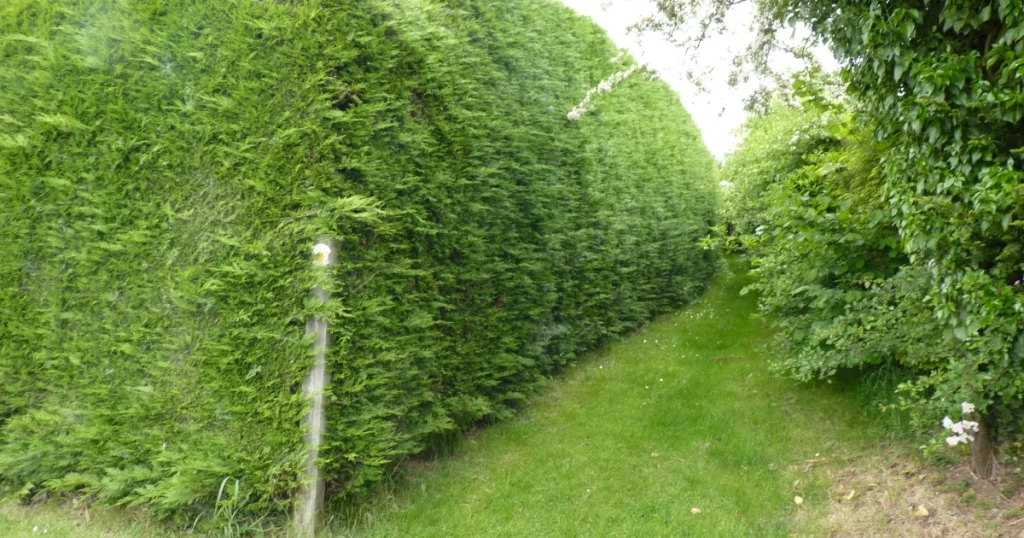
A spite fence law can apply to trees and hedges, not just wooden fences. In many states, a row of trees or a tall hedge planted or maintained mainly to annoy an adjoining neighbor can be treated as a “spite fence” and declared a private nuisance. If a court agrees, it can order the owner to reduce the height or remove the offending growth and, in some cases, award damages.
The catch is proof: you generally must show the barrier is unusually tall and that its dominant purpose is to harass rather than serve a legitimate use like privacy or shade. This guide explains how spite fence statutes treat living barriers, what “malice” means in court, and the practical steps to resolve a spite-tree dispute.
What is a spite fence?
A spite fence is a barrier erected or maintained primarily to annoy or harm a neighbor rather than to benefit the owner’s own property. Traditional spite fence statutes targeted tall wooden walls built out of pure malice. Over time, courts and legislatures extended the idea to living barriers — rows of trees, hedges, and shrubs that function like a fence.
California’s statute is a common model. Civil Code section 841.4 declares that any fence or fence-like structure “unnecessarily exceeding 10 feet in height” that is “maliciously erected or maintained” to annoy an adjoining owner is a private nuisance. Local ordinances can set stricter limits — Los Angeles, for example, uses a six-foot threshold for fences, walls, and hedges.
Can trees and hedges count as a spite fence?
Yes, in a number of states. California appellate courts have led the way: in Wilson v. Handley, the court held that a row of trees can constitute a “structure in the nature of a fence,” and in Vanderpol v. Star, a line of pine trees planted along a boundary was treated as a potential spite fence. The key is that the plants function as a barrier — planted in a row along the property line — rather than as isolated ornamental trees.
Not every tall tree qualifies. A single mature oak, or trees scattered around a yard, generally will not be a spite fence even if they block a view. The doctrine targets barriers, so the arrangement and purpose of the planting matter as much as its height. For view and light concerns specifically, see our guide on neighbor trees blocking your view or light.
How is malice proven?
Malice is the heart of a spite fence claim and the hardest part to prove. Most courts apply a dominant purpose test: if the main reason the barrier exists is to annoy the neighbor, malice may be found. If there is another dominant, legitimate purpose — privacy, wind protection, screening a road, or aesthetics — there is usually no malice, even if the neighbor is also annoyed.
Evidence courts consider
- Statements by the owner expressing intent to “block” or “get back at” the neighbor.
- Timing — a barrier that appears right after a dispute erupts.
- Whether the growth serves any real use for the owner’s own property.
- Sudden height increases or refusal to trim after complaints.
The legitimate-purpose defense
An owner can defeat a claim by showing a genuine reason for the hedge. This is why documenting the history of the dispute matters: emails, texts, and witness accounts often decide these cases. Whether you can trim the barrier yourself is limited — read what your neighbor can and cannot cut before touching any branches.
Height limits and local ordinances
Spite fence statutes and local codes often set a trigger height. State thresholds are commonly around ten feet, while city ordinances may be lower. The table summarizes how the pieces fit together — always confirm your own state statute and municipal code, which control.
| Rule source | What it typically covers | Common trigger |
|---|---|---|
| State spite fence statute | Malicious fences and fence-like hedges | ~10 ft (varies) |
| City/county ordinance | Local height caps on hedges and fences | ~6–8 ft (varies) |
| HOA rules | Private landscaping and height limits | Set by the HOA |
What remedies do you have?
If a court finds a spite fence, typical remedies include an injunction ordering the height reduced or the barrier removed, and sometimes damages for the loss of enjoyment of your property. Because these cases turn on malice, many are resolved before trial through mediation or a written agreement to trim to a set height.
| Step | What to do |
|---|---|
| 1. Document | Photograph the barrier, note its height and planting date, and save any hostile messages. |
| 2. Communicate | Send a calm written request to trim; keep a copy. |
| 3. Check local law | Confirm your state statute and city hedge-height ordinance. |
| 4. Mediate | Try neighborhood mediation before litigation. |
| 5. Sue if needed | File a private nuisance / spite fence claim as a last resort. |
For the wider set of boundary rules, see boundary tree law and our state-by-state tree law comparison.
Frequently asked questions
Can a hedge be a spite fence?
Yes. In several states, a hedge or row of trees planted as a barrier to annoy a neighbor can be treated as a spite fence and declared a private nuisance.
How tall can a hedge be before it’s illegal?
It depends on your state statute and local ordinance. State spite fence laws often use about ten feet, while city codes may cap hedges lower. Height alone isn’t enough — malice must also be shown.
How do I prove my neighbor’s trees are a spite fence?
Show the growth functions as a barrier and that its dominant purpose is to annoy you. Statements, timing after a dispute, and lack of any legitimate use are persuasive evidence.
What if my neighbor says the hedge is for privacy?
A genuine privacy or screening purpose usually defeats a spite fence claim, because the barrier then has a legitimate dominant purpose rather than malice.
Can I be ordered to remove my own trees?
Potentially. If a court finds a spite fence, it can order the height reduced or the trees removed, and sometimes award damages.
Disclaimer: This article is general information, not legal advice. Spite fence and nuisance laws vary by state and city and change over time. Consult a licensed attorney in your area about your specific situation.
