

Does Homeowners Insurance Cover Tree Removal? (2026)
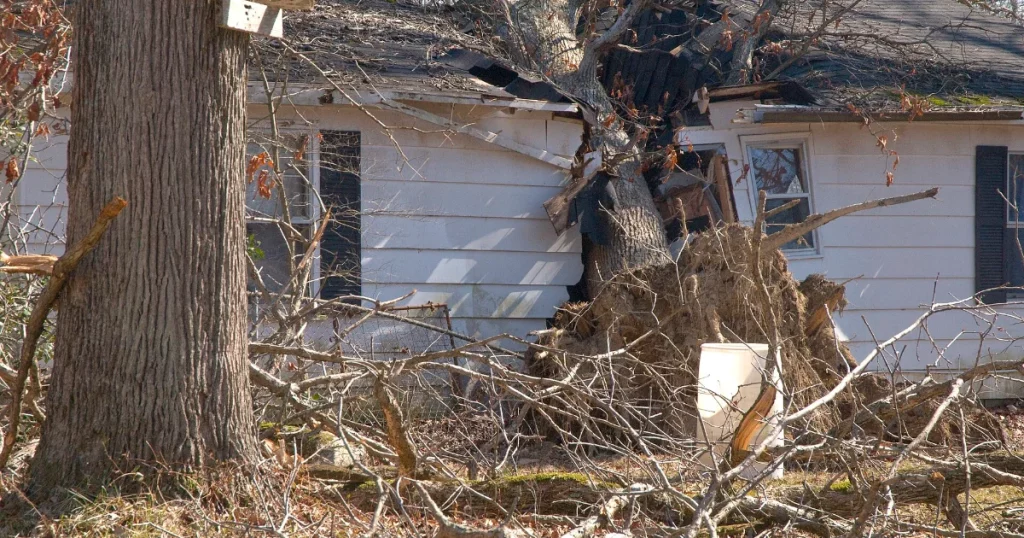
Homeowners insurance usually covers tree removal only when a tree falls because of a covered peril—such as wind, a storm, lightning, or the weight of ice or snow—and damages an insured structure like your house, garage, or fence. In that case your policy typically pays to remove the tree and repair the damage, minus your deductible, up to a debris-removal limit that is often between $500 and $1,000 per tree. Routine or preventive removal of a healthy or simply unwanted tree is almost never covered.
Looking at repairs rather than hauling the tree away? See does homeowners insurance cover tree damage.
This guide explains exactly when a standard policy pays, when it does not, how deductibles and removal limits work, what happens when a neighbor’s tree falls on your property, and how to file a claim that gets approved. Coverage details vary by insurer and state, so always confirm the specifics with your own policy and agent.
Does homeowners insurance cover tree removal?
Yes, but conditionally. Homeowners insurance covers tree removal when a covered peril knocks a tree onto a covered structure or blocks a driveway or accessibility ramp. It does not cover removing a healthy, dead, or diseased tree that simply needs to come down, and it generally will not pay if the tree fell only because of neglected maintenance. The damage—not the tree itself—is what triggers coverage.
When homeowners insurance covers tree removal
Standard policies (often an HO-3) cover tree removal when two conditions are both met: the tree fell due to a covered peril, and it caused damage to a covered structure or blocked essential access. Common covered perils include:
- Windstorms and hurricanes that topple a tree onto your home.
- Lightning strikes that destabilize or fell a tree.
- The weight of ice, sleet, or snow that brings a tree down.
- Fire or explosion affecting the tree.
- Vandalism or a vehicle (not driven by you or a resident) striking the tree.
Damage to a structure is usually required
If a storm drops a tree on your roof, garage, shed, or fence, your policy generally pays to remove the tree and repair the structure. If that same tree falls in your yard and hits nothing, most insurers will not pay to haul it away—because there is no covered damage.
Blocked access is an exception
Many policies make an exception when a downed tree blocks your driveway or a ramp used for accessibility, even if the tree did not damage a structure. In that situation, removal may be covered up to your policy’s debris-removal limit. The Insurance Information Institute confirms that coverage usually depends on what the tree hits and why it fell.
When tree removal is NOT covered
Several common situations fall outside standard coverage:
| Situation | Typically covered? | Why |
|---|---|---|
| Storm fells a tree onto your house | Yes | Covered peril + structure damage |
| Healthy tree you simply want gone | No | Preventive/elective removal |
| Dead or rotted tree falls (neglect) | Often no | Preventable with maintenance |
| Tree falls in yard, hits nothing | Usually no | No covered damage |
| Tree blocks the driveway | Sometimes | Access exception, up to limit |
| Removal due to disease or pests | No | Maintenance issue |
Neglect and preventable hazards
If an insurer determines a tree fell because it was already dead, diseased, or visibly hazardous and you failed to address it, the claim can be denied as a maintenance issue. Documenting tree care and removing obvious hazards promptly protects both your property and your coverage. If a clearly dangerous tree threatens your home, learn whether you can compel removal of a dangerous tree before it falls.
How much will insurance pay for tree removal?
Two limits shape your payout: your deductible and your policy’s debris-removal sublimit. The deductible is subtracted first, and the removal coverage is often capped at $500 to $1,000 per tree (some policies set a total per-storm cap).
| Scenario | Removal cost | Deductible | Removal limit | Insurer pays (approx.) |
|---|---|---|---|---|
| Small tree on garage | $800 | $500 | $1,000 | ~$300 |
| Large tree on house | $1,500 | $1,000 | $1,000 | ~$500 (capped) |
| Tree blocks driveway | $700 | $1,000 | $1,000 | $0 (below deductible) |
Because of these caps, a low-cost removal can fall entirely under your deductible, meaning you pay out of pocket even though the loss is technically covered. Repairing the damaged structure is handled under your dwelling or other-structures coverage and has its own, usually much higher, limit.
What if a neighbor’s tree falls on my property?
This surprises many homeowners: when a neighbor’s tree falls on your house due to a storm, your own homeowners insurance generally handles the claim and removal, not the neighbor’s. Insurance follows the damaged property. Your insurer may later pursue the neighbor’s insurer (a process called subrogation) if the neighbor was negligent—for example, if the tree was obviously dead and they ignored warnings.
| Who owns the tree | Whose insurance pays | Notes |
|---|---|---|
| Your tree on your house | Your policy | Standard claim |
| Neighbor’s tree on your house (storm) | Your policy | Insurer may subrogate |
| Neighbor’s clearly dead tree on your house | Possibly neighbor’s | If negligence is proven |
For the legal side of these scenarios, see our guides on who is liable when a neighbor’s tree falls on your house, liability for a tree that falls during a storm, and who is liable if a tree falls on a fence.
How to file a tree removal insurance claim
Acting quickly and documenting thoroughly improves your odds of approval:
- Ensure safety first. Stay away from downed power lines and unstable structures.
- Document everything. Photograph the tree, the damage, and the surrounding area before any cleanup.
- Prevent further damage. Make reasonable temporary repairs (like tarping a roof) and keep receipts.
- Call your insurer promptly to open a claim and ask about your deductible and removal limit.
- Get written estimates from licensed, insured tree and repair companies.
- Keep all records of expenses, communications, and the adjuster’s findings.
If the fallen tree also needs full removal and disposal, our overview of who is responsible for removing a fallen tree explains how cost responsibility is decided.
How to avoid a denied claim
- Maintain your trees. Prune and remove dead or diseased trees before they fall; keep records of the work.
- Know your limits. Review your declarations page for the debris-removal sublimit and deductible.
- Report promptly. Delays can complicate a claim and let damage worsen.
- Document hazards in writing. If a neighbor’s tree is dangerous, notify them in writing so negligence can be established later.
- Consider added coverage. Ask your agent about higher debris-removal limits if you have many large trees.
Tree removal coverage by policy type
The kind of homeowners policy you carry affects how perils are evaluated, though the tree-removal limits are usually similar across forms. The key difference is whether your policy covers losses on a named-peril basis (only listed causes) or an open-peril basis (everything except stated exclusions).
| Policy form | Coverage basis | Tree removal treatment |
|---|---|---|
| HO-1 / HO-2 | Named perils | Covered only if a listed peril (wind, ice, etc.) fells the tree onto a structure |
| HO-3 (most common) | Open perils on dwelling | Removal covered for most sudden perils when a structure is damaged |
| HO-5 (premium) | Open perils, broader | Broadest coverage and often higher sublimits |
Whatever your form, the debris-removal sublimit and deductible still apply. Read your declarations page or ask your agent which form you have and what your per-tree limit is.
Does insurance cover tree removal after a hurricane or major storm?
Generally yes, when wind or the storm fells a tree onto a covered structure—but storm-prone regions add wrinkles. Many coastal and hurricane-exposed states apply a separate windstorm or hurricane deductible, often calculated as a percentage of your dwelling coverage (commonly 1% to 5%) rather than a flat dollar amount. On a $400,000 home, a 2% hurricane deductible is $8,000, which can dwarf a tree-removal bill and leave the entire cost with you. Some policies also cap total debris removal per storm, so multiple downed trees may share one limit. After a widespread event, document each tree and structure separately and file promptly, because adjusters are stretched thin and timelines matter.
Coverage for trees as landscaping
Your policy also provides limited coverage for trees, shrubs, and plants as landscaping under Coverage C. This is typically capped at about 5% of your dwelling limit, with a per-item cap often around $500 to $1,000 per tree, and it applies only to specific perils such as fire, lightning, vandalism, theft, or a vehicle or aircraft—not wind or disease. In practice this means a prized tree killed by a storm’s wind or by pests is rarely reimbursed as landscaping. If a neighbor or contractor destroys your tree, that is a separate liability matter; see what to do when a neighbor damages your property.
How coverage and liability vary by state
Insurance contracts are regulated at the state level, and liability rules that affect subrogation differ too. Some states follow strict rules holding tree owners responsible only when they knew or should have known a tree was hazardous, while others lean on “reasonable care” standards. These differences influence whether your insurer can recover from a neighbor and whether a neglect denial will hold up. Our tree laws by state comparison breaks down how responsibility is assigned across the country so you know where you stand before a claim arises.
Tree removal versus tree damage: what your policy actually pays
It helps to separate two parts of any tree claim, because they draw on different parts of your policy and different limits. The damage a tree causes to your home or other structures is paid under your dwelling (Coverage A) or other-structures (Coverage B) limits, which are usually tens of thousands of dollars. The removal of the fallen tree and its debris is paid under a small debris-removal provision that is often capped at $500 to $1,000 per tree. So a single storm can produce a generous payout for a crushed roof but only a modest one for hauling the tree away. Understanding this split prevents sticker shock when the adjuster’s numbers come back, and it explains why two homeowners with similar damage can receive very different removal reimbursements depending on their sublimits and deductibles.
Frequently asked questions
Does insurance cover removing a tree that hasn’t fallen?
No. Removing a standing tree—even a dead or hazardous one—is considered maintenance and is paid out of pocket. Coverage applies only after a covered peril causes damage.
Will insurance pay if a healthy tree falls in my yard and hits nothing?
Usually not. Without damage to a covered structure (or a blocked driveway), most policies will not pay to remove a tree that simply fell in the yard.
Who pays when my neighbor’s tree falls on my house?
Typically your own homeowners insurance handles the claim, then may seek reimbursement from the neighbor’s insurer if negligence contributed to the fall.
How much does insurance pay for tree removal?
Often $500 to $1,000 per tree for debris removal, after your deductible. Structural repairs are covered separately under your dwelling coverage.
Does the type of tree or its value affect coverage?
Removal coverage is based on the loss, not the tree’s species or appraised value. Coverage for the tree itself as landscaping is usually a small percentage of your dwelling limit and excludes disease and neglect.
Is tree removal tax deductible instead of covered by insurance?
For a personal residence, tree removal is generally not tax deductible and not covered unless tied to a covered loss. Rules can differ for rental or business property, so consult a tax professional.
Does filing a tree removal claim raise my premium?
A single weather-related claim may have limited impact, but multiple claims can raise your rates or affect renewal. When the cost is close to your deductible, paying out of pocket is often the smarter move.
Does insurance cover removing a stump after a covered tree falls?
Stump grinding is sometimes included as part of debris removal when the fall is covered, but it can also be treated as a separate, non-covered cost. Confirm with your adjuster, and get the stump-removal price quoted as its own line item.
For a detached-structure loss, see what happens when a tree falls on a shed and how insurance responds.
Disclaimer: This article provides general information, not legal or insurance advice. Coverage, limits, and exclusions vary by insurer, policy, and state. Always read your policy and consult your insurance agent or a qualified professional about your specific situation.
