

Tree Fell on Shed: Does Insurance Cover It?
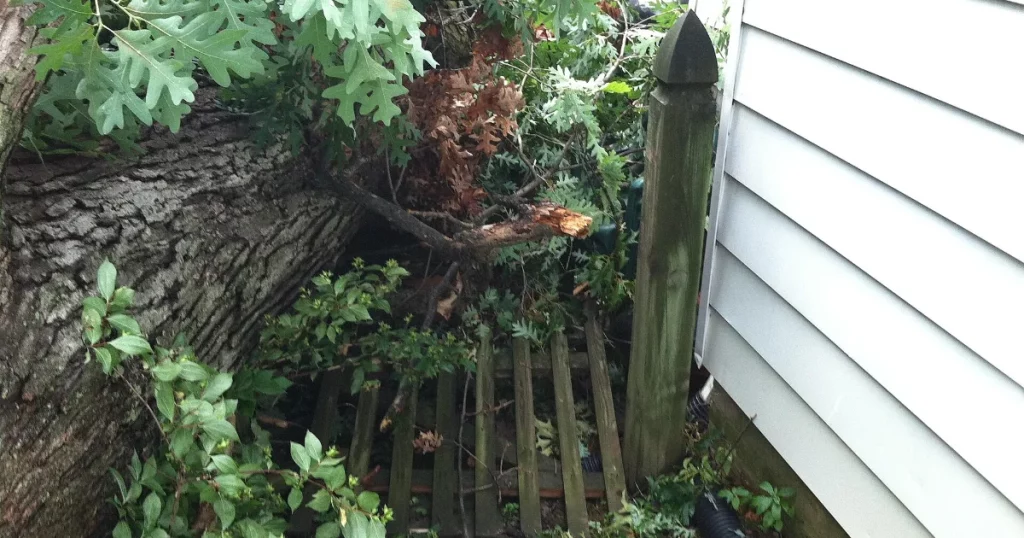
If a tree fell on your shed, homeowners insurance usually covers the damage under the “other structures” part of your policy—provided the tree fell from a covered peril such as wind, a storm, or lightning. Sheds, detached garages, and fences fall under this coverage, typically limited to about 10% of your home’s dwelling coverage.
The important details are what caused the tree to fall, whether the repair is worth more than your deductible, and how your policy values the shed. A storm-toppled tree is generally covered; a shed crushed by a tree that was already dead and neglected may not be. Here’s exactly how shed coverage works, what it pays, and how to decide whether to file. This is general information, not insurance or legal advice—coverage varies by policy and state.
Does homeowners insurance cover a tree falling on a shed?
Yes, in most cases. A shed is a detached structure, so it’s covered under Coverage B (other structures) on a standard homeowners policy. When a tree falls on it because of a covered peril, your insurer pays to repair or rebuild the shed—up to the other-structures limit and minus your deductible.
| Cause of the tree falling | Shed damage typically covered? |
|---|---|
| Wind, storm, hurricane, or tornado | Yes |
| Lightning or ice/snow weight | Yes |
| Healthy tree that fell unexpectedly | Usually yes |
| Dead, rotted, or neglected tree | Often denied (maintenance/negligence) |
| Flood or earthquake | No (needs separate policy) |
The same coverage rules apply to other detached structures. For the bigger picture, see whether homeowners insurance covers tree damage generally.
What “other structures” coverage means
Coverage B protects structures on your property that aren’t attached to the house—sheds, detached garages, gazebos, fences, and sometimes retaining walls. It’s usually set at a percentage of your dwelling limit:
- Typical limit: around 10% of your dwelling coverage. A home insured for $300,000 would have roughly $30,000 in other-structures coverage.
- Shared limit: that amount covers all detached structures combined, not each one separately.
- Contents: tools and belongings stored inside the shed fall under personal property (Coverage C), not other structures.
What a shed claim pays: repair, removal, and contents
| Item | Coverage part | Notes |
|---|---|---|
| Shed repair or rebuild | Other structures (B) | Up to your other-structures limit |
| Tools/items inside the shed | Personal property (C) | Subject to contents limits and sub-limits |
| Removing the fallen tree | Debris removal | Commonly capped at $500–$1,000 |
| Fence damaged by the same tree | Other structures (B) | Shares the same limit |
Because tree removal is capped, a large tree that costs more to remove can leave you paying the difference. Our guide on whether insurance covers tree removal explains those limits in detail.
ACV vs. replacement cost on a shed
How much you actually receive depends on whether your policy pays actual cash value (ACV) or replacement cost value (RCV) for other structures. Many policies pay ACV on sheds, which factors in depreciation.
| Valuation method | What you get | Effect on an older shed |
|---|---|---|
| Actual cash value (ACV) | Replacement cost minus depreciation | Lower payout on an aged shed |
| Replacement cost (RCV) | Cost to rebuild with like materials | Higher payout, may need endorsement |
Is it worth filing a claim for a shed?
Not always. Because deductibles typically run $500 to $2,000, a modest shed can cost less to fix than your deductible—meaning a claim pays little or nothing while still counting on your record. Weigh three things before you file:
- Repair or replacement cost vs. deductible. If the shed repair is $800 and your deductible is $1,000, filing isn’t worthwhile.
- ACV depreciation. On an older shed, the depreciated payout may be small.
- Claims history. Multiple claims can raise premiums; a single small claim may not be worth that risk.
If the damage is significant or the tree also hit your house or fence, filing usually makes sense. In that case, follow the full process in our guide to filing an insurance claim for a fallen tree.
Whose insurance pays if it was a neighbor’s tree?
As with any fallen-tree loss, the policy that responds is usually the owner of the property the tree landed on. If your neighbor’s tree falls on your shed during a storm, you generally file with your own insurer. If the tree was clearly dead and your neighbor ignored warnings, your insurer may seek reimbursement from the neighbor’s insurer. Learn more in who is responsible for removing a fallen tree.
Steps after a tree falls on your shed
- Stay safe. Watch for downed power lines and unstable structures before approaching.
- Document it. Photograph the shed, the tree, and any damaged contents before moving anything.
- Prevent further damage. Cover exposed contents or tarp the shed if it’s salvageable.
- Check the numbers. Estimate the repair and compare it to your deductible before filing.
- Contact your insurer. If you file, open the claim promptly and keep all receipts and estimates.
Frequently asked questions
Does insurance cover the tools inside my shed?
Usually yes, under personal property coverage—but watch for sub-limits on certain items and whether your policy pays ACV or replacement cost on contents.
My shed was old. Will insurance still pay?
If the loss is from a covered peril, yes, but an ACV policy reduces the payout for depreciation. A well-worn shed may be worth little after depreciation.
Will insurance remove the tree from my shed?
Debris removal is typically covered when the tree hit an insured structure, but it’s capped—often $500–$1,000. Costs above the cap are yours.
Should I file if the damage is minor?
Often no. If repairs cost less than your deductible, paying out of pocket avoids a claim on your record and possible premium increases.
Disclaimer: This article is general information, not insurance or legal advice. Coverage, limits, valuation, and deductibles vary by policy, insurer, and state. Review your policy and consult your insurer for your specific claim.
