

Does Homeowners Insurance Cover Tree Damage? (2026)
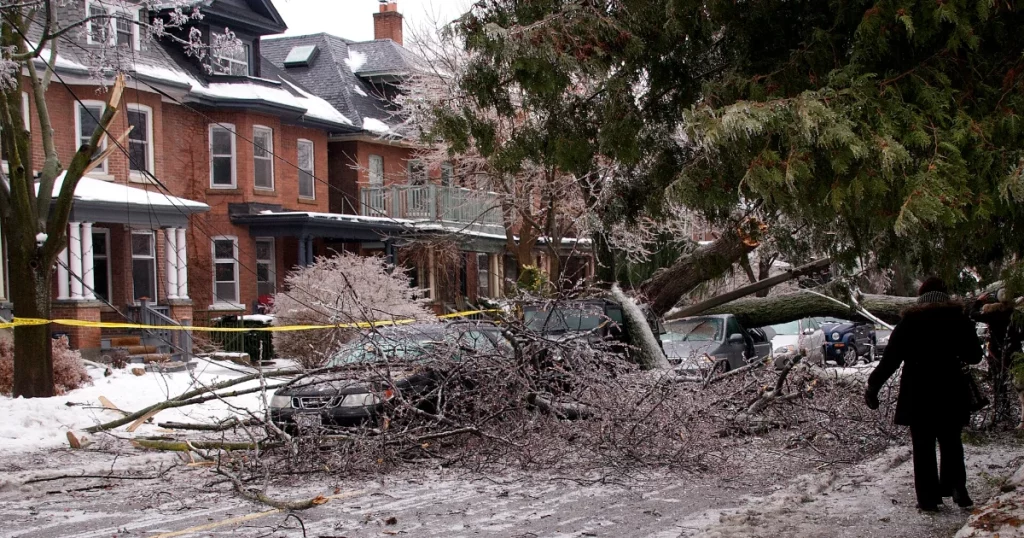
Homeowners insurance generally covers tree damage when a tree falls and damages a covered structure—your house, garage, shed, or fence—because of a covered peril such as wind, hail, lightning, or the weight of ice and snow. Your policy pays to repair the damage, minus your deductible, up to your dwelling and other-structures limits. What it usually will not cover is damage from a tree that fell due to rot, disease, or neglect, or the removal of a tree that fell without hitting anything.
This guide covers exactly what damage is and is not covered, which part of your policy pays for each type of loss, the important difference between home and auto coverage when a tree hits your car, what happens when your tree damages a neighbor’s property, and how to file a successful claim. If your main question is about hauling the tree away rather than repairs, see our companion guide on whether homeowners insurance covers tree removal.
Does homeowners insurance cover tree damage?
Yes, in most cases. When a tree falls and damages your home or another insured structure because of a sudden, covered peril, your homeowners policy pays for the repairs after your deductible. Coverage is tied to the cause of the fall and the property damaged—not to the tree itself. Damage from gradual decay, pests, or a clearly hazardous tree you failed to maintain is typically excluded.
What tree damage is covered
Standard policies cover sudden, accidental damage from named or open perils. Typical covered causes include wind and windstorms, hurricanes, lightning, hail, and the weight of ice, sleet, or snow. When one of these brings a tree down onto covered property, the resulting damage is generally paid.
| What the tree damages | Coverage that applies | Typically covered? |
|---|---|---|
| Your house / roof | Dwelling (Coverage A) | Yes, after deductible |
| Detached garage, shed, fence | Other structures (Coverage B) | Yes, after deductible |
| Belongings inside the home | Personal property (Coverage C) | Yes, for covered perils |
| Your car | Auto comprehensive (not home) | Only if you carry comprehensive |
| A neighbor’s property (your tree) | Personal liability (Coverage E) | Only if you were negligent |
Damage to the home and other structures
If a storm drops a tree through your roof, the repairs fall under your dwelling coverage, which usually has a limit equal to your home’s rebuild cost. Damage to detached structures—a garage, shed, or fence—is paid under other-structures coverage, commonly set at about 10% of your dwelling limit.
Damage to personal belongings
Items damaged inside when a tree breaches the home—furniture, electronics, clothing—are covered under personal property coverage for the same perils, subject to your limits and any special sublimits.
What tree damage is NOT covered
Insurers exclude losses they view as preventable or gradual:
- Neglect and decay. If the tree was dead, rotted, or visibly hazardous and you did nothing, the claim can be denied.
- Pests and disease. Damage tied to infestation or illness is treated as a maintenance issue.
- Earth movement and flooding may be excluded unless you carry specific coverage.
- A tree that falls and hits nothing—there is no covered damage to repair.
- Wear and tear or long-term settling, even if a tree contributes.
Maintaining your trees and addressing obvious hazards promptly is the single best way to keep a future claim from being denied. If a dangerous tree is involved, our guide on what to do when a tree damages your property explains your next steps.
What if a tree falls on my car?
This is the most common point of confusion. Damage to a vehicle from a falling tree is not covered by homeowners insurance—it is covered by the comprehensive portion of your auto policy, if you carry it. Comprehensive pays for non-collision events like falling trees, storms, and hail, minus your auto deductible. If you only carry liability auto coverage, a tree falling on your car is generally not covered at all. For how fault and payment are decided, see who is liable if a tree falls on a car.
What if my tree damages a neighbor’s property (or theirs damages mine)?
When a tree falls because of a storm, the insurance of the property that was damaged typically pays—regardless of who owned the tree. So if your neighbor’s tree falls on your house in a storm, you usually file with your own insurer, who may then seek reimbursement from the neighbor’s insurer if negligence is shown. The reverse is also true: if your healthy tree blows onto a neighbor’s home, their policy usually handles it.
| Scenario | Whose insurance pays | Liability factor |
|---|---|---|
| Storm fells your tree onto neighbor’s house | Neighbor’s homeowners policy | None if tree was healthy |
| Your known-dead tree falls on neighbor’s house | Possibly yours (liability) | Negligence may apply |
| Neighbor’s tree falls on your house (storm) | Your homeowners policy | Insurer may subrogate |
The legal details vary; see who is liable when a neighbor’s tree falls on your house, liability for a tree that falls in a storm, and who is liable if a tree falls on a fence.
How much does insurance pay for tree damage?
Repair coverage is generous compared with removal coverage. Structural repairs draw on your dwelling or other-structures limits, which are usually tens of thousands of dollars, while the separate cost of hauling the fallen tree away is capped at a small debris-removal sublimit (often $500 to $1,000 per tree). The Insurance Information Institute notes that a standard homeowners policy bundles these coverages with separate limits, so it pays to know each one. Your deductible is subtracted once per claim before any repair payment.
How to file a tree damage claim
- Make sure everyone is safe and avoid downed power lines or unstable structures.
- Photograph and video the damage thoroughly before cleanup.
- Make temporary repairs (tarp the roof, board windows) and save receipts—policies require you to prevent further damage.
- Contact your insurer quickly to start the claim and learn your deductible and limits.
- Get written repair estimates from licensed contractors.
- Keep a paper trail of all costs, calls, and the adjuster’s report.
Tree damage coverage by policy type
How your claim is evaluated depends partly on your policy form. Named-peril forms cover only listed causes, while open-peril forms cover any cause that is not specifically excluded—an important difference if a tree falls for an unusual reason.
| Policy form | Coverage basis | Tree damage treatment |
|---|---|---|
| HO-1 / HO-2 | Named perils | Damage covered only if caused by a listed peril such as wind or ice |
| HO-3 (most common) | Open perils on the dwelling | Most sudden causes of structural tree damage are covered unless excluded |
| HO-5 (premium) | Open perils, broadest | Widest protection for both the structure and belongings |
Whatever your form, exclusions for neglect, decay, and pests still apply, and your deductible and coverage limits govern the payout.
Hurricane and storm deductibles for tree damage
In hurricane- and windstorm-prone states, tree damage from a named storm may trigger a separate percentage deductible rather than a flat dollar amount. These are commonly 1% to 5% of your dwelling coverage. On a home insured for $350,000, a 2% hurricane deductible is $7,000 that you pay before coverage begins. Because falling trees are usually a wind event, this can dramatically change what you actually recover after a major storm. Check your declarations page for any wind, hurricane, or named-storm deductible, and ask your agent how it would apply to a tree-through-the-roof scenario so there are no surprises during a stressful time.
Does insurance cover the tree itself and landscaping?
Beyond structural repairs, your policy provides limited coverage for trees, shrubs, and plants as landscaping. This is typically capped at about 5% of your dwelling limit, with a per-tree cap often around $500, and it applies only to specific perils—fire, lightning, vandalism, theft, and vehicle or aircraft impact—not wind, ice, or disease. In other words, the storm that damages your roof and is fully repairable may pay little or nothing toward replacing the prized shade tree that caused the damage, because wind-killed landscaping is generally excluded.
How to prevent tree damage and protect your coverage
- Inspect trees yearly for dead limbs, leaning, cracks, and root problems.
- Prune and remove hazards promptly, and keep dated records and receipts.
- Hire a certified arborist to assess questionable trees near structures.
- Document a neighbor’s hazardous tree in writing so negligence can be established later.
- Know your deductibles and limits, including any separate wind or hurricane deductible.
For how responsibility is assigned in different states, our tree laws by state comparison shows where owners are liable and where they are not.
Common reasons tree damage claims get denied
Understanding why insurers reject claims helps you avoid the same mistakes. The most frequent denial reasons are a tree that was already dead or visibly decayed (treated as neglect), damage from gradual causes like slow root intrusion rather than a sudden event, losses falling under separate flood or earth-movement exclusions, removal costs that exceed the small debris sublimit, and claims where the damage total comes in below the deductible. Many denials also stem from thin documentation—without dated photos and maintenance records, it is harder to prove the tree was healthy and the loss was sudden. Building a simple paper trail of inspections and pruning makes the difference between an approved and a contested claim.
Frequently asked questions
Does homeowners insurance cover a tree falling on my house?
Yes. If a covered peril like wind or ice brings the tree down on your home, your policy pays for repairs minus your deductible, up to your dwelling limit.
Does insurance cover tree damage if the tree was dead?
Often no. If the tree was dead, diseased, or obviously hazardous and you failed to remove it, the insurer may deny the claim as preventable neglect.
Will my rates go up after a tree damage claim?
A single weather-related claim may have a modest effect, but frequent claims can raise premiums or affect renewal. Weigh the repair cost against your deductible before filing.
Does insurance cover a tree that falls on my car?
Not under homeowners insurance. A tree falling on a vehicle is covered by comprehensive auto coverage, if you carry it, subject to your auto deductible.
Who pays if my tree damages my neighbor’s house?
Usually your neighbor’s own homeowners insurance, unless your tree was clearly hazardous and you were negligent, in which case your liability coverage may apply.
Does insurance cover removing the tree after it damages my house?
Removal is paid under a small debris-removal limit, often $500 to $1,000 per tree, which is separate from the much larger repair coverage. See our guide on tree removal coverage for details.
What if a tree damages my home but the cost is below my deductible?
You pay out of pocket. Coverage only reimburses costs above your deductible, so minor tree damage is frequently a self-pay repair.
Is a fence damaged by a fallen tree covered?
Yes, a fence is usually covered under other-structures coverage when a covered peril fells the tree, subject to your deductible and that coverage’s limit.
Does insurance cover tree roots damaging my foundation or pipes?
Generally no. Root damage is gradual rather than sudden, so it is typically treated as a maintenance issue and excluded from standard policies.
Does renters insurance cover tree damage?
Renters insurance covers your belongings if a fallen tree damages them through a covered peril, but the building itself is the landlord’s responsibility under their property policy.
How long do I have to file a tree damage claim?
Most policies require prompt notice, and many set a filing window of one to two years, but reporting within days is best so damage does not worsen and evidence stays fresh.
Will insurance cover damage if my tree was healthy but still fell?
Yes. If a healthy tree falls because of a sudden covered peril such as high wind, the resulting structural damage is generally covered, since healthy trees are not considered a maintenance failure.
Ready to file? Follow our step-by-step guide to an insurance claim for a fallen tree.
Disclaimer: This article is general information, not legal or insurance advice. Coverage, limits, and exclusions vary by insurer, policy, and state, and rules differ across jurisdictions. Always review your own policy and consult your insurance agent or a qualified professional about your specific situation.
\n
For the specific scenario of a tree striking your home, see our guide on whether insurance covers a tree falling on your house.
