

Neighbor Tree Trimming Laws: Your Rights and Limits
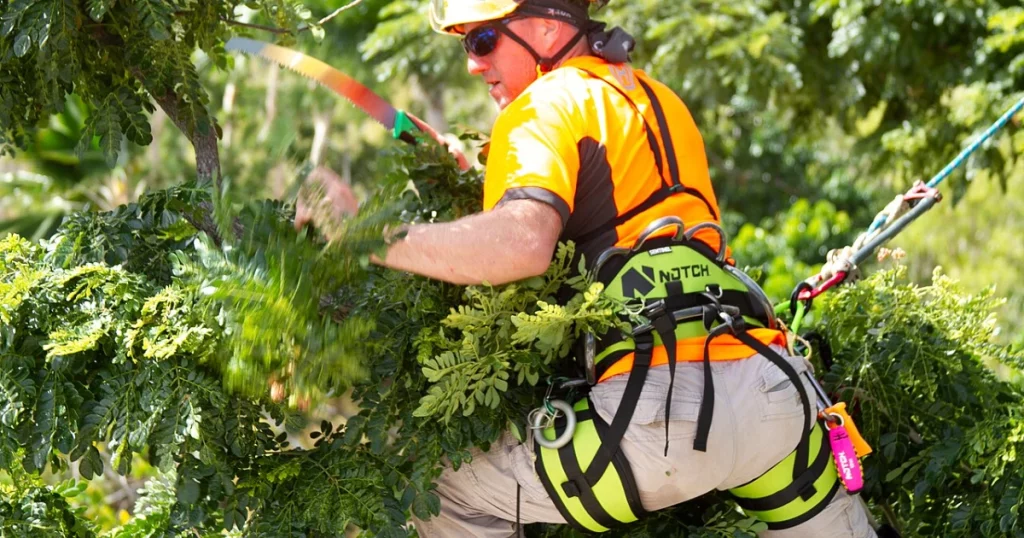
Under most neighbor tree trimming laws, you have the right to cut branches and roots from your neighbor’s tree that cross onto your property, but only back to the boundary line. You cannot step onto their land, remove the whole tree, or trim so aggressively that you kill or disfigure it. This right is known as the “self-help” doctrine, and it applies in nearly every U.S. state.
That simple rule hides a lot of nuance. How far you can cut, who pays, whether you must give notice, and when a neighbor can be forced to act all depend on your state’s standard and your local ordinances. This guide breaks down what you can legally do, where the limits are, and how to handle overhanging branches without turning a tree into a lawsuit. General information only, not legal advice.
Can you trim a neighbor’s branches that hang over your yard?
Yes. You can legally trim branches from a neighbor’s tree that overhang your property, cutting them back to the property line at your own expense. This is the self-help remedy, and courts in nearly every state recognize it. You do not need the neighbor’s permission to trim the portion physically on your side of the boundary.
The catch is that your right stops exactly at the property line. Anything on the neighbor’s side of that invisible vertical plane belongs to them. Reaching over, climbing their fence, or cutting past the boundary converts lawful pruning into trespass and potential property damage, which is where most tree-trimming disputes actually go wrong.
The four legal limits on trimming a neighbor’s tree
The right to trim is real but narrow. Cross any of these four lines and you can flip from being in the right to owing your neighbor money.
1. Trim only up to the property line
You may remove growth that crosses onto your side, but not one inch beyond the boundary. Cutting a “notch” past the line, or shaping the whole canopy, exceeds the self-help right and can make you liable for the damage. When the exact line is unclear, confirm it before cutting rather than guessing.
2. Never enter the neighbor’s property without permission
You cannot walk onto, reach over, or set a ladder on your neighbor’s land to prune, even if that is the only convenient way to reach the branch. Doing so is trespass. The narrow exception in some states is an imminent, grave hazard, but the safe path is always to ask permission or hire a professional.
3. Don’t kill, destroy, or disfigure the tree
Even trimming strictly on your side, you cannot prune so severely that you destroy the tree’s structural integrity, ruin its symmetry, or cause it to die. If your cutting kills the tree, the owner can sue you for its replacement value, which for a mature tree can run into thousands of dollars. Follow proper pruning practices published by the International Society of Arboriculture.
4. Give the owner notice first
Notice is not always legally required, but it is strongly advised and, in some jurisdictions, expected before you cut. A short written note gives the tree owner a chance to fix the problem, documents that you acted reasonably, and protects you if a dispute follows. See our guide on how to resolve a tree dispute with a neighbor.
| You legally CAN | You legally CANNOT |
|---|---|
| Trim branches to the property line | Cut past the boundary into their side |
| Cut encroaching roots on your land | Enter their yard without permission |
| Hire an arborist to do the work | Kill, top, or disfigure the tree |
| Keep or compost trimmings (usually) | Force the neighbor to pay for your trimming |
Who pays, and who owns the branches and fruit?
Who pays for the trimming
If you want branches on your side trimmed for your own benefit, you generally pay. The self-help remedy is something you exercise at your own cost. A neighbor only becomes financially responsible when the tree is legally a hazard or nuisance they failed to address after notice, which is a higher bar than simple annoyance.
Who owns fallen branches, leaves, and fruit
Ownership follows the trunk, not the branches. The person on whose property the trunk sits owns the tree, even if branches or fruit hang over the line. In most states, fruit hanging over your yard still belongs to the tree owner, and leaves or branches that drop onto your property are considered a natural occurrence you are responsible for cleaning up, not a legal wrong.
Once you lawfully trim a branch, disposal etiquette varies. Some homeowners return cut limbs to the owner; many simply dispose of them. Check any local ordinance, and when in doubt, ask. For ownership questions, see who owns a tree on the property line.
Two legal standards states follow
When trimming is not enough and real damage or a hazard is involved, your state’s underlying standard decides whether the tree owner owes you anything. Two doctrines dominate.
| Standard | What it says | Practical effect |
|---|---|---|
| Massachusetts Rule (traditional, common) | Self-help is your only remedy for overhanging branches and encroaching roots from a healthy tree | You trim at your own cost; the owner owes nothing for natural encroachment |
| Hawaii Rule (modern, minority) | When a tree causes actual harm or imminent danger to structures, the owner can be required to pay and cut it back | You may recover damages and force action when real harm is shown |
| Nuisance / negligence (most states, as an overlay) | A known hazardous or dead tree the owner ignored after notice can create liability | Notice plus a known defect is the key to shifting responsibility |
Because the split is real, the same fact pattern can end differently in two states. Our explainer on the Massachusetts Rule covers how the traditional standard limits recovery.
When can you force a neighbor to trim their tree?
You generally cannot force a neighbor to trim a healthy tree just because it drops leaves, blocks a view, or overhangs your yard. Aesthetic and minor nuisances rarely meet the legal threshold. You may be able to compel action when the tree is dead, diseased, or structurally dangerous and the owner knows about it, because that can rise to a legal nuisance or a negligence claim if it later causes harm.
Trees on the property line are treated as jointly owned in many states, meaning neither owner can remove or seriously harm the tree without the other’s consent. If a neighbor’s tree is clearly hazardous, document it, notify them in writing, and involve a certified arborist or your city’s code office. Learn more about whether your neighbor can cut your tree and whether a neighbor can force you to cut down a tree.
Special situations that change the rules
City-owned and street trees
Trees in the strip between the sidewalk and the street, often called the parkway or right-of-way, are frequently owned or controlled by the municipality even though they sit in front of your home. You usually cannot trim or remove these yourself; instead you request service from the city’s urban forestry or public works department. Cutting a protected street tree without approval can trigger municipal fines.
Branches near power lines
Never trim a tree touching or near overhead power lines yourself. Utilities have both the right and the responsibility to keep vegetation clear of their lines, and this work must be left to trained line-clearance crews. Call your utility to report the contact rather than attempting a trim. See our guide on tree branches touching power lines.
HOA and deed-restricted trees
If you live in a homeowners association or a community with recorded covenants, private rules can add a layer on top of state law. Some HOAs require approval before removing or heavily pruning trees, and some assign maintenance of certain trees to the association. Check your governing documents before you cut, because violating them can bring separate fines even when state law would allow the trim.
Penalties for illegal tree trimming
Over-trimming or crossing the line is not a minor matter. Many states impose treble (triple) damages for wrongfully cutting or injuring another person’s tree, meaning you could owe three times the tree’s appraised value plus restoration costs.
| Violation | Typical consequence |
|---|---|
| Trespassing to trim | Civil trespass; fines commonly ranging from $500 to $2,500 |
| Killing or disfiguring the tree | Up to double or triple the tree’s value in many states |
| Removing a protected or heritage tree | Municipal fines, permit penalties, replacement orders |
| Cutting a boundary (jointly owned) tree | Liability to the co-owning neighbor for their share |
Exact figures vary widely by state and city, so treat these as ranges. If a neighbor damaged your tree, see can I sue my neighbor for tree damage.
How to handle overhanging branches the right way
- Confirm the boundary. Check your plat or survey so you know exactly where the property line runs before any cutting.
- Talk to your neighbor first. A friendly conversation resolves most cases and preserves goodwill.
- Put it in writing. If talking does not work, send a dated, polite note describing the issue and your intent to trim to the line.
- Hire a certified arborist for anything large. Professionals prune correctly, stay on your side, and carry insurance.
- Trim only to the property line. Never reach over, and never top or gut the tree.
- Document everything. Photos and notes protect you if the neighbor later claims damage.
Frequently asked questions
Can I trim my neighbor’s tree branches that hang over my fence?
Yes, you can trim branches back to the property line at your own expense, but you cannot cut past the boundary, enter their yard, or harm the tree’s health. Give notice first when you can.
Do I have to tell my neighbor before trimming overhanging branches?
Notice is not always legally required, but it is strongly recommended. Written notice gives the owner a chance to act, shows you behaved reasonably, and protects you if a dispute arises.
Who owns fruit on branches that hang over my property?
The tree owner does. Ownership follows the trunk, so fruit on overhanging branches still belongs to your neighbor in most states, even though the branch is above your land.
Can my neighbor make me trim my tree?
Usually not, unless the tree is dead, diseased, or dangerous and you were notified. Healthy trees that merely drop leaves or overhang a line rarely create a legal duty to trim.
What happens if I accidentally kill my neighbor’s tree while trimming?
You can be held liable for the tree’s replacement value, and many states allow double or triple damages for injuring another’s tree. Prune conservatively and hire a professional for large jobs.
Disclaimer: This article provides general information about neighbor tree trimming laws and is not legal advice. Tree and property laws vary by state and municipality. Consult a licensed attorney or your local code office about your specific situation.
