

Penalty for Cutting Down a Tree: Fines & Damages
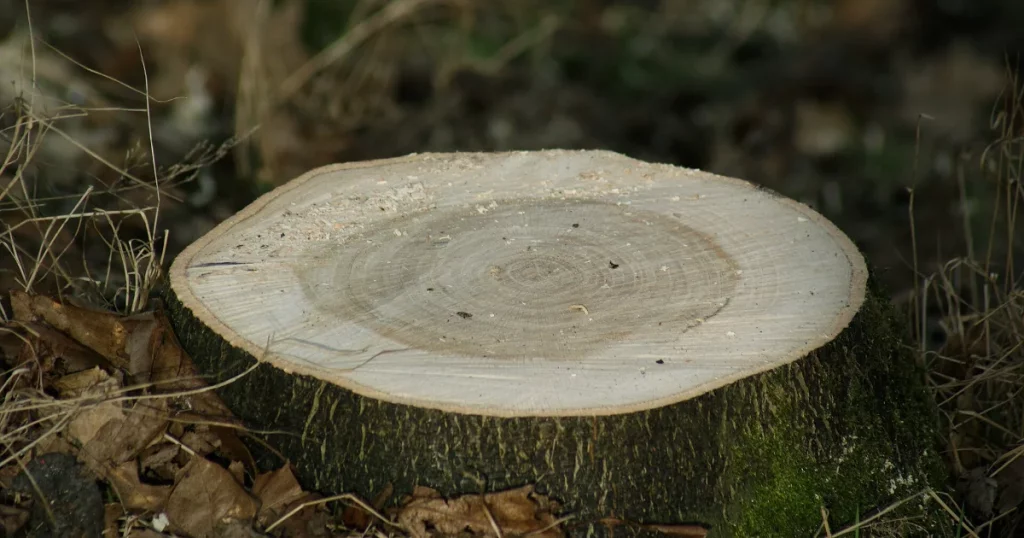
Cutting down a tree can carry a surprisingly heavy penalty — sometimes a few hundred dollars, sometimes tens of thousands. What you’ll owe depends on whose tree it was, whether it was protected, and whether you had a permit.
Short answer: Removing your own unprotected tree is usually legal and penalty-free. But cutting a protected or permit-required tree can bring city fines ranging from a few hundred to tens of thousands of dollars per tree, and cutting someone else’s tree (a neighbor’s or a public tree) can expose you to double or triple the tree’s value under timber-trespass laws, plus restoration costs and, in some places, criminal charges.
What the penalty depends on
There is no single national penalty. The consequences turn on three questions:
- Whose tree was it? Your own, a neighbor’s, or a public/street tree.
- Was it protected? Heritage, landmark, or ordinance-protected species and sizes carry the steepest fines.
- Did you have a permit or consent? Many cities require a permit to remove trees over a certain size, even on your own land.
| Whose tree | Main penalty risk |
|---|---|
| Your own, unprotected | Usually none |
| Your own, protected or permit-required | City fine (plus replanting) |
| A neighbor’s tree | Double/treble damages + restoration |
| A public or street tree | City fine + full replacement value |
Laws vary widely by state, county, and city, so treat the figures below as general ranges, not a quote for your situation.
Penalty for cutting down your own tree without a permit
On your own property, removing a small or unprotected tree is generally legal and carries no penalty. The trouble starts when a tree is protected or exceeds a size threshold that requires a permit. Many municipalities regulate the removal of trees above a certain trunk diameter, heritage species, or trees in protected zones.
| Violation | Typical penalty range |
|---|---|
| Removing a permit-required tree without a permit | ~$500–$10,000 per tree (varies by city) |
| Removing a protected or heritage tree | Higher fines, often plus mandatory replacement |
| Egregious or repeat violations | Tens of thousands of dollars; some cities reach $100,000+ |
| Removing an unprotected tree on your own land | Usually none |
Fines are frequently assessed per tree and can be multiplied in strict jurisdictions — several California cities, for example, are known for very large penalties. Cities also commonly require you to replant replacement trees or pay into a tree fund. Before removing anything sizable, confirm the rules in our guide on whether you need a permit to remove a tree and whether you can legally cut your own tree down.
Protected, heritage, and street trees
The largest penalties involve protected or public trees. A tree preservation order or heritage-tree ordinance can forbid removal entirely without special approval, and public agencies pursue restitution for the full appraised value of a lost street or park tree. Damaging a city tree can bring both a fine and a bill for the tree’s replacement value.
Penalty for cutting down someone else’s tree
This is where penalties escalate fastest. Cutting, topping, or seriously damaging a tree that isn’t yours — a neighbor’s tree, or one on the boundary line — without permission can trigger timber-trespass statutes that most states have adopted.
| Type of liability | What it covers |
|---|---|
| Compensatory (actual) damages | The tree’s value or your property’s loss in value |
| Statutory multiplier (double/treble) | 2× to 3× the tree’s value, often when cutting was intentional |
| Restoration cost | The cost to replace or restore the landscape |
| Criminal charges (some states) | Trespass, criminal mischief, or theft |
Many states set the penalty at double or treble (triple) the value of the tree, depending on whether the cutting was deliberate or accidental. For example, New York’s RPAPL § 861 allows up to treble the stumpage value of the tree or $250 per tree; Illinois similarly permits treble damages for wrongful cutting. Because a mature shade tree can be appraised in the thousands, a multiplier can turn a handful of trees into a five- or six-figure judgment. Our explainer on what timber trespass is breaks down how these claims work, and can I sue my neighbor for tree damage covers the victim’s side.
How the penalty amount is calculated
Courts and cities don’t guess at the number. A tree’s value is usually established by a professional appraisal — often using recognized methods that weigh species, size, condition, and location — or by the cost to replace it with comparable trees. See how tree appraisal works for the methods involved. The higher the appraised value, the higher any multiplier climbs.
Public trees and reporting a violation
Trees on public land, in the right-of-way, or on the “tree lawn” between the sidewalk and street are typically owned by the municipality. Cutting or damaging them without authorization is enforced by the city — agencies such as NYC Parks publish fine schedules for illegal tree work, and cities like Portland codify penalties for tree-code violations. If a tree of yours was cut illegally, see how to report illegal tree cutting.
How to avoid a penalty
- Check for a permit requirement before removing any large or mature tree, even on your own property.
- Confirm the property line and tree ownership with a survey if the tree is anywhere near a boundary.
- Get written consent from your neighbor before touching a tree that isn’t clearly yours — verbal permission is hard to prove.
- Hire a licensed, insured tree service. Reputable companies check permits and boundaries and carry liability coverage.
- Keep documentation — permits, surveys, and consent — in case a dispute arises later.
Frequently asked questions
What is the penalty for cutting down a tree without a permit?
It depends on your city. Fines commonly run from about $500 to $10,000 per tree, with some jurisdictions reaching much higher for protected or heritage trees, plus possible mandatory replanting.
What happens if I cut down my neighbor’s tree?
You can be liable under timber-trespass law for double or triple the tree’s appraised value, plus restoration costs, and possibly face criminal charges. Damaging even part of a neighbor’s tree without consent is risky.
Can I be fined for cutting a tree on my own property?
Yes, if the tree is protected or over a size that requires a permit. Unprotected trees below the threshold can usually be removed without penalty — but always check local rules first.
Are the penalties criminal or civil?
Both are possible. Permit fines and timber-trespass damages are civil, but some states also allow criminal charges such as trespass or criminal mischief for willful cutting.
How is the value of a cut tree determined?
Through a professional appraisal that considers species, size, condition, and location, or by the cost to replace the tree. That value is then multiplied under any applicable statute.
This article is general information, not legal advice. Tree-cutting penalties vary by state and locality and change over time. For a specific situation, consult a local attorney or your city’s urban-forestry office.
